Internal governance platform for the world's largest brewer
Analysts, data scientists and business leaders relied on 12 disconnected off-the-shelf tools. I led the design of the internal products that centralized access, standards and compliance, aligning Product, Engineering and Governance.
Project context
The platform is an internal ecosystem built to turn data into decisions and create value from it. It serves analysts, data scientists and business leaders at the world's largest brewer, centralizing governance, democratizing access to information and speeding up smarter decisions at scale.
Before the platform, the company had no centralized data governance: off-the-shelf tools drove high costs, information silos and duplicate data with no clear standards. The lack of defined policies made information hard to access, undermined quality for decision-making and raised the risk of non-compliance and security failures at scale.
Senior Product Designer on the Platforms team, from discovery to handoff. I set the research strategy, built the internal design system and validated with users before every release.
“Loses hours looking for reliable data across disconnected tools, without knowing whether the information is up to date or correct.”
“Access secure, standardized data on a single platform, with the confidence to base strategic decisions on it without rework.”
What the data and users revealed
Interviews with analysts showed that 60% of their time went into finding data, not analyzing it: a direct loss of productivity.
The mapping found 12 different governance tools, producing duplicate, inconsistent and unstandardized data.
The lack of access control increased exposure to non-compliance and security failures.
Teams without centralized governance took 3× longer to deliver strategic reports to the business.
From problem to solution
Immersion in users and workflows
I set the research strategy and ran in-depth interviews and behavior analysis to understand user needs and map the main data governance challenges.
Market studies and strategic direction
I complemented the research with market studies to guide design and prioritization decisions.
Information structure and navigation
I organized content and features into logical, intuitive flows, with clear navigation systems and well-defined hierarchies.
Visual identity, prototypes and validation
I built the internal design system, with the visual identity and standardized components for the products. Hi-fi prototyping let us validate with real users before every release.
A visual walkthrough of the solution
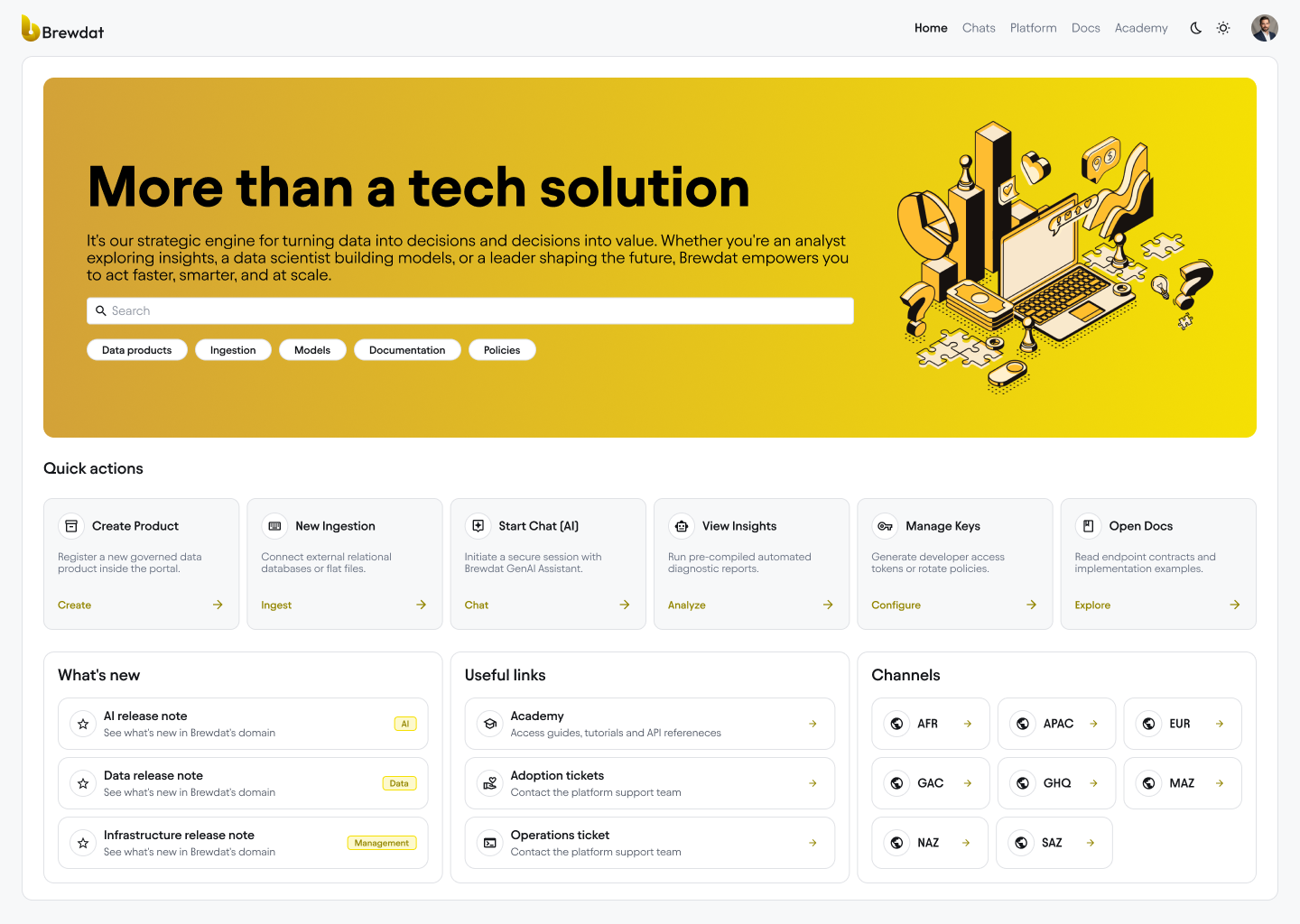
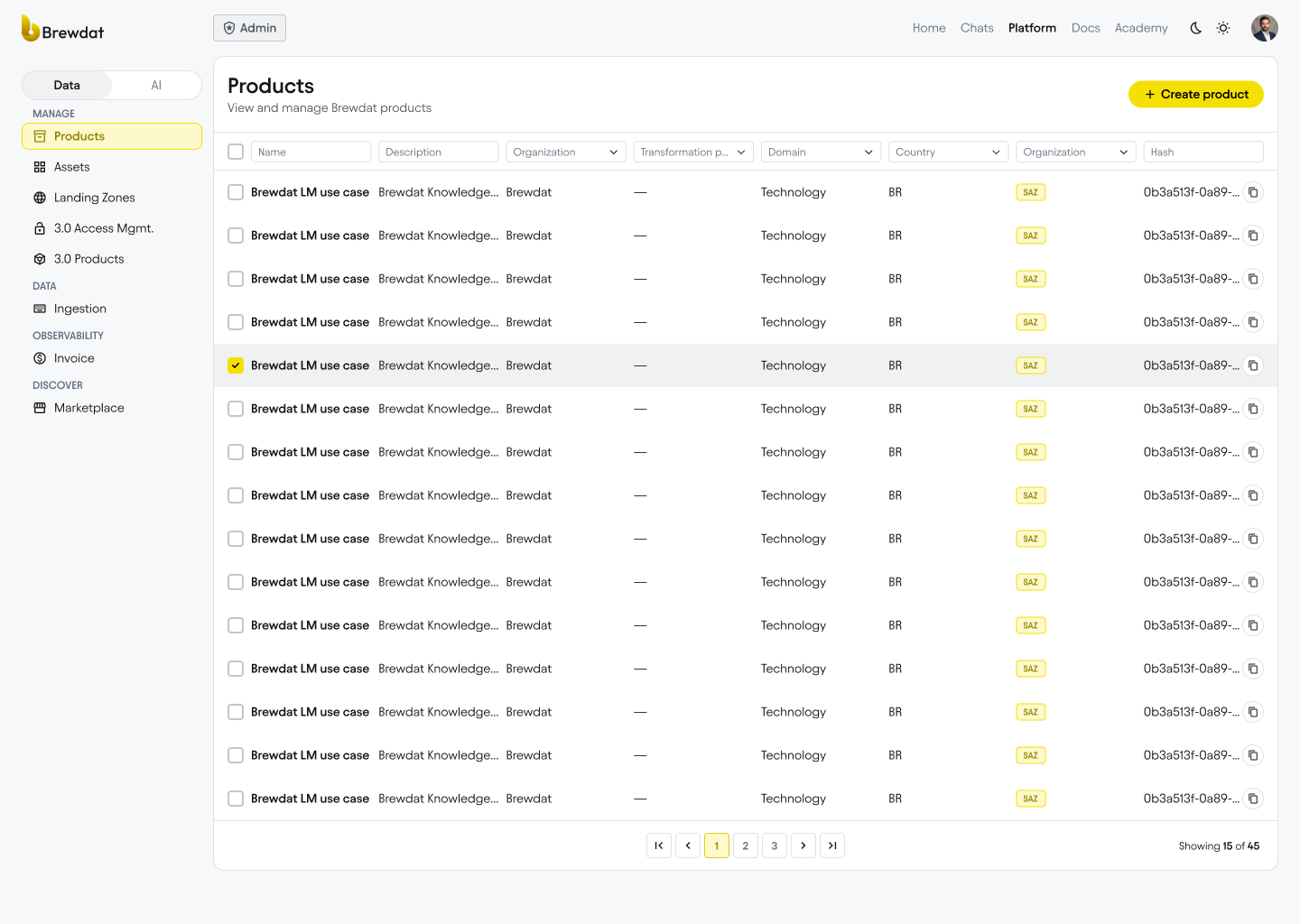
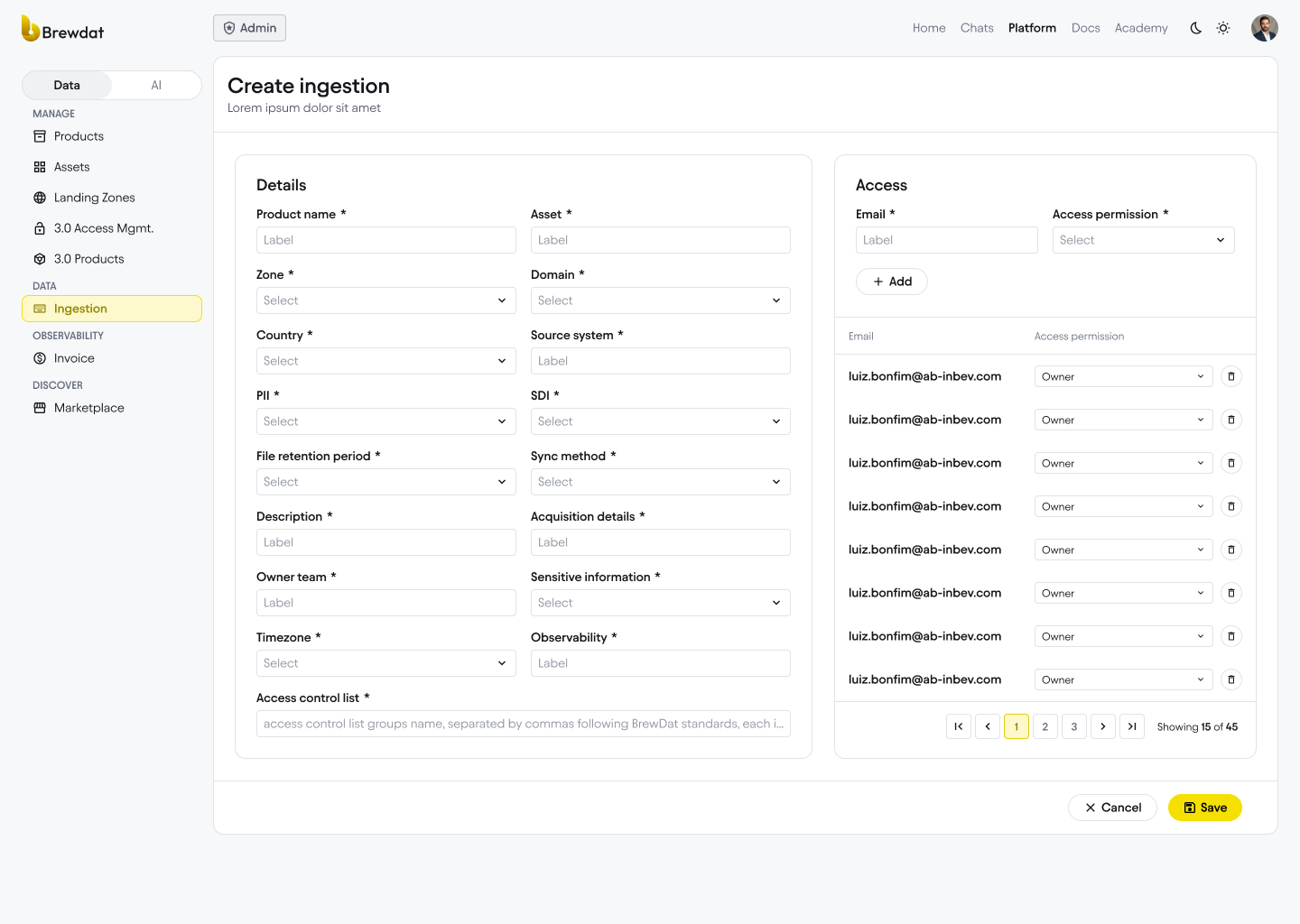
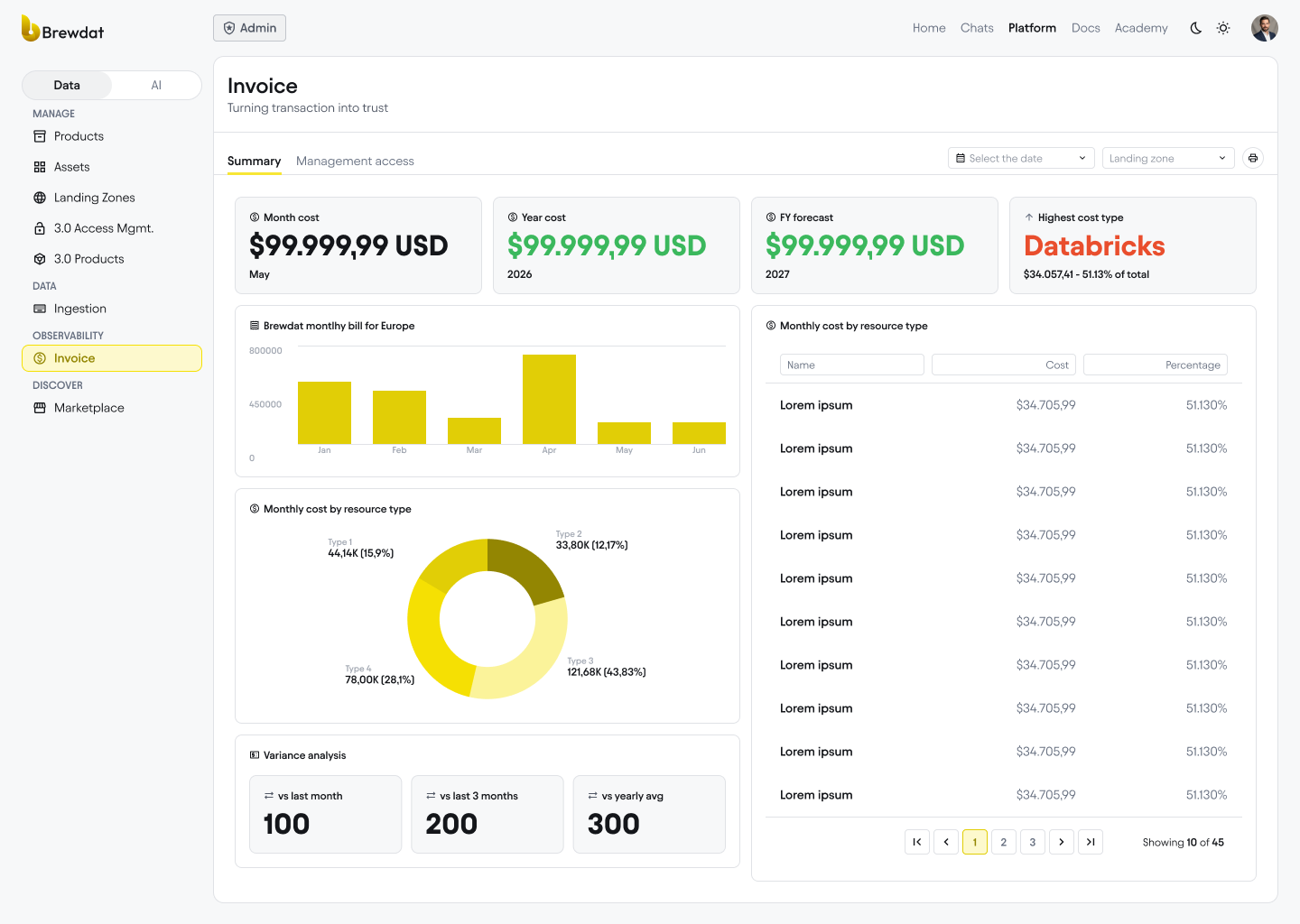
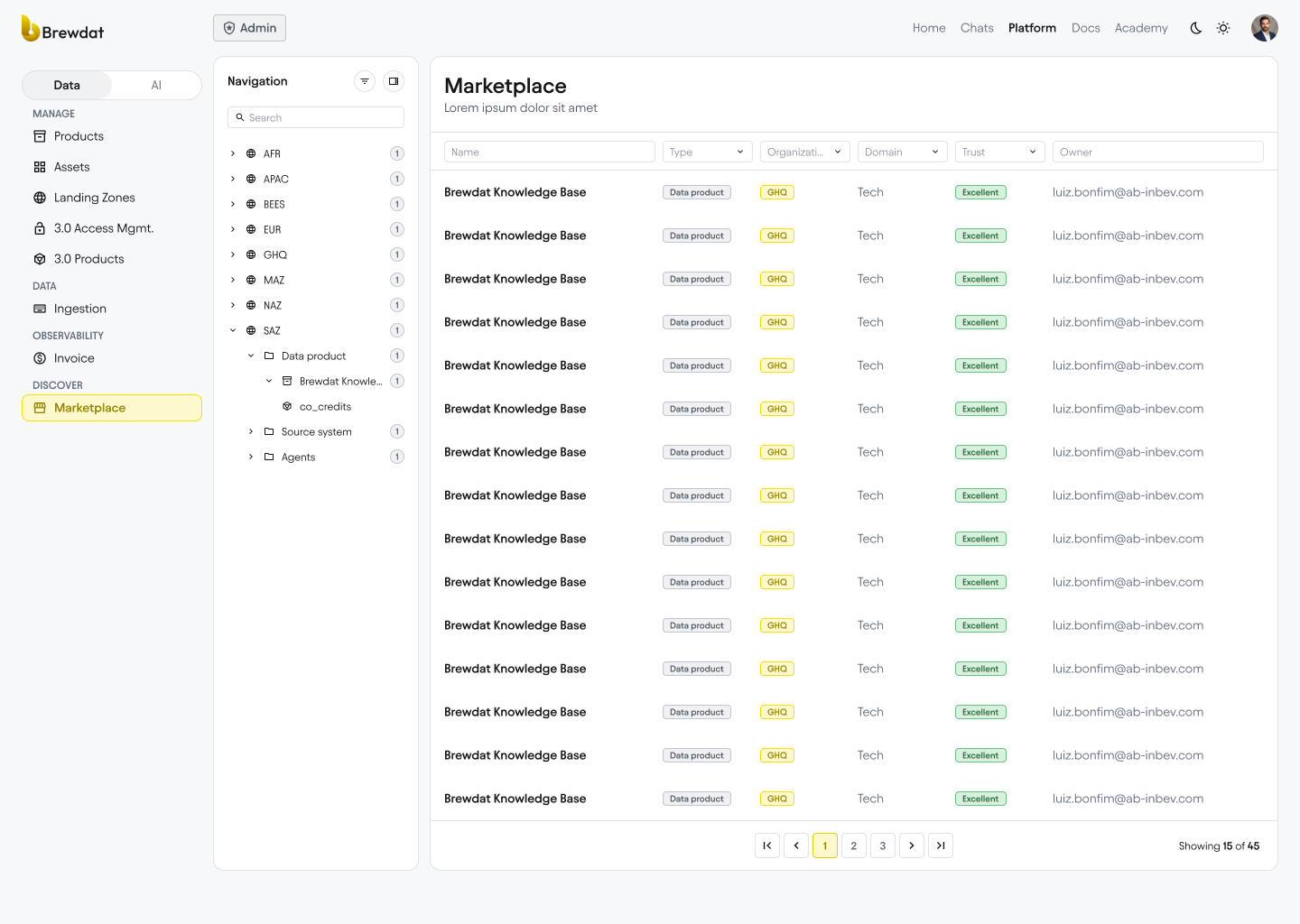
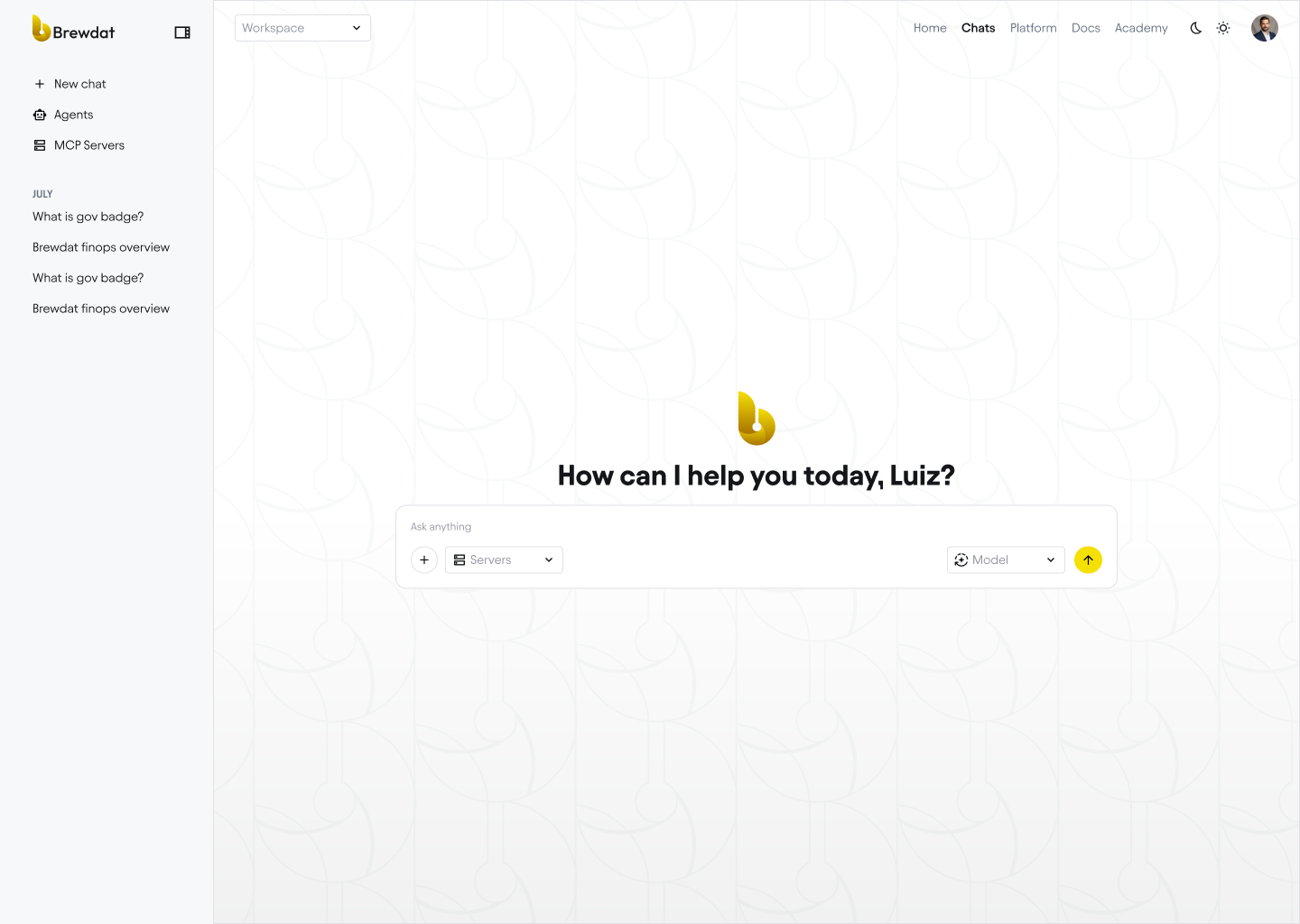
Why each choice matters
Internal products replacing off-the-shelf tools
Building in-house gave full control over data security, quality and accessibility, removing external costs and dependencies.
Governance with clear standards and automated compliance
We defined policies, roles and automated processes that make compliance and data lifecycle management easier.
A tailored experience for each user profile
I designed interfaces adapted to each profile, making the technical complexity of governance accessible to everyone.