Roles, SLAs and processes for a data team
A chemical industry data team operated without clear roles and depended on a few people for everything. I designed and facilitated the workshop that formalized roles, SLAs and the support flow for this multidisciplinary team.
Project context
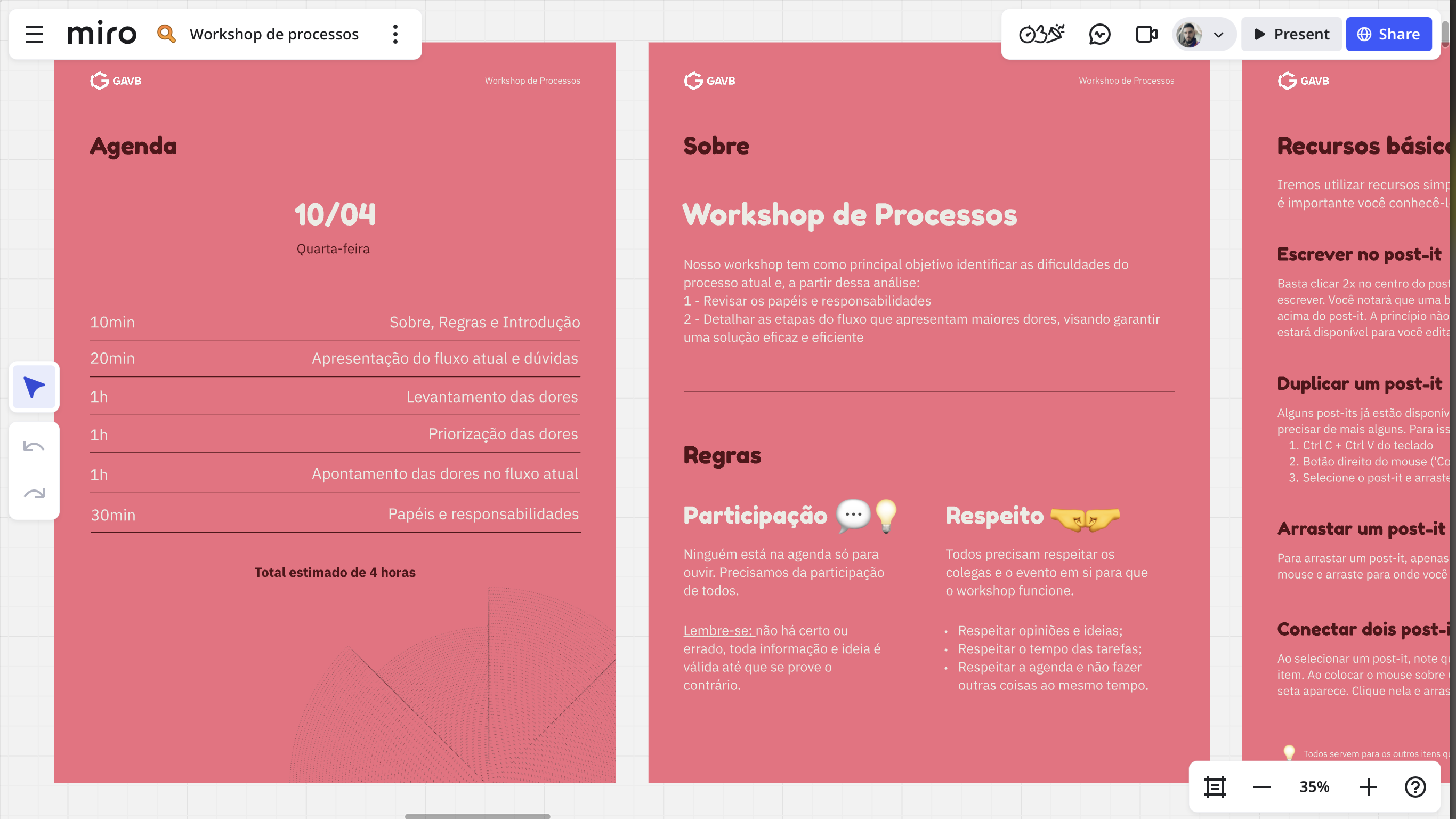
A process workshop run to identify difficulties in the current data governance flow, review roles and responsibilities and detail the most painful stages.
The team faced unclear responsibilities, heavy reliance on key people and no structured processes for data support and validation.
UX Designer on the Digital Excellence team. I designed and facilitated the workshop, led the pain mapping and the role review and consolidated the findings into the next-steps plan.
“Loses time solving recurring support issues because there are no clear processes, defined SLAs or formal responsibilities for the data.”
“Have documented roles, responsibilities and flows so the team can operate with autonomy, predictability and quality in its deliveries.”
What the data and users revealed
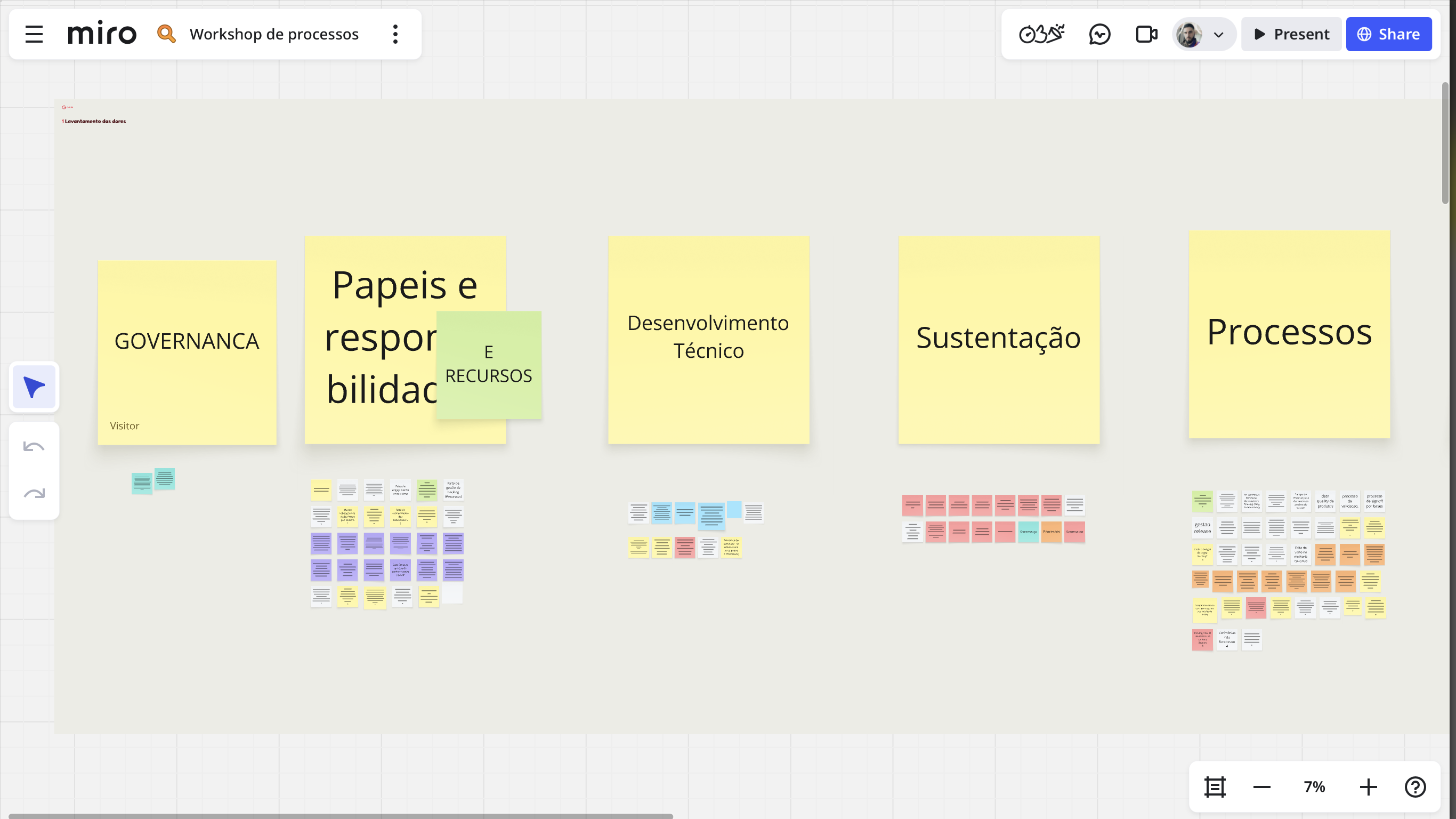
The digital sticky-note exercise showed that unclear roles were the main cause of rework and delays in data projects.
The analysis of the current flow found POs frequently missing from agile ceremonies, creating bottlenecks in decisions and validations.
Reliance on specific people for access and deploys was a critical operational risk: any absence stalled deliveries.
The lack of SLAs and monitoring led to recurring issues, with no visibility of progress or clear accountability.
From problem to solution
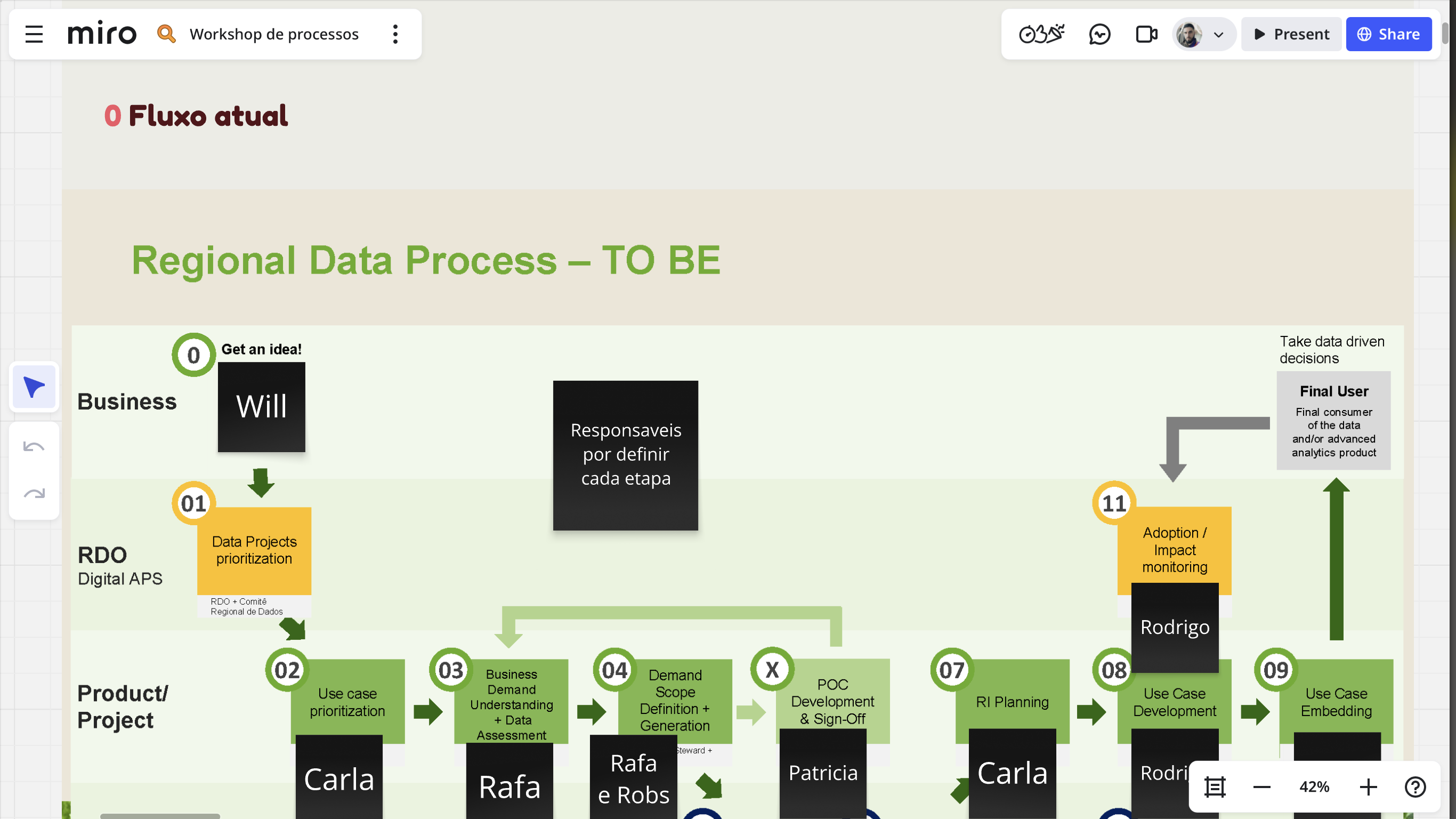
Walking through the flow and mapping problems
After presenting the current flow, I led the group in capturing problems on digital sticky notes, building a clear picture of the difficulties.
Role review and analysis of critical stages
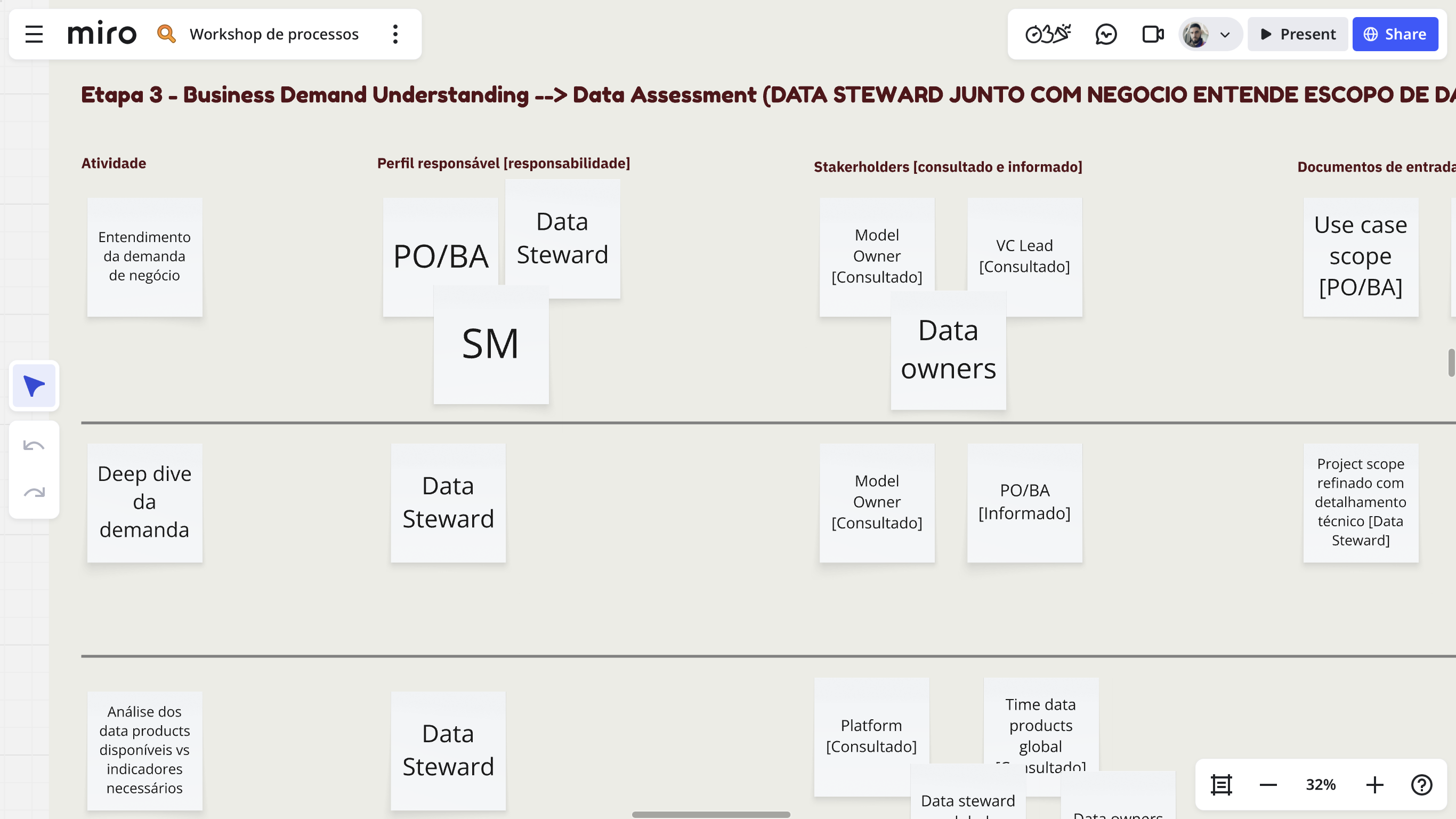
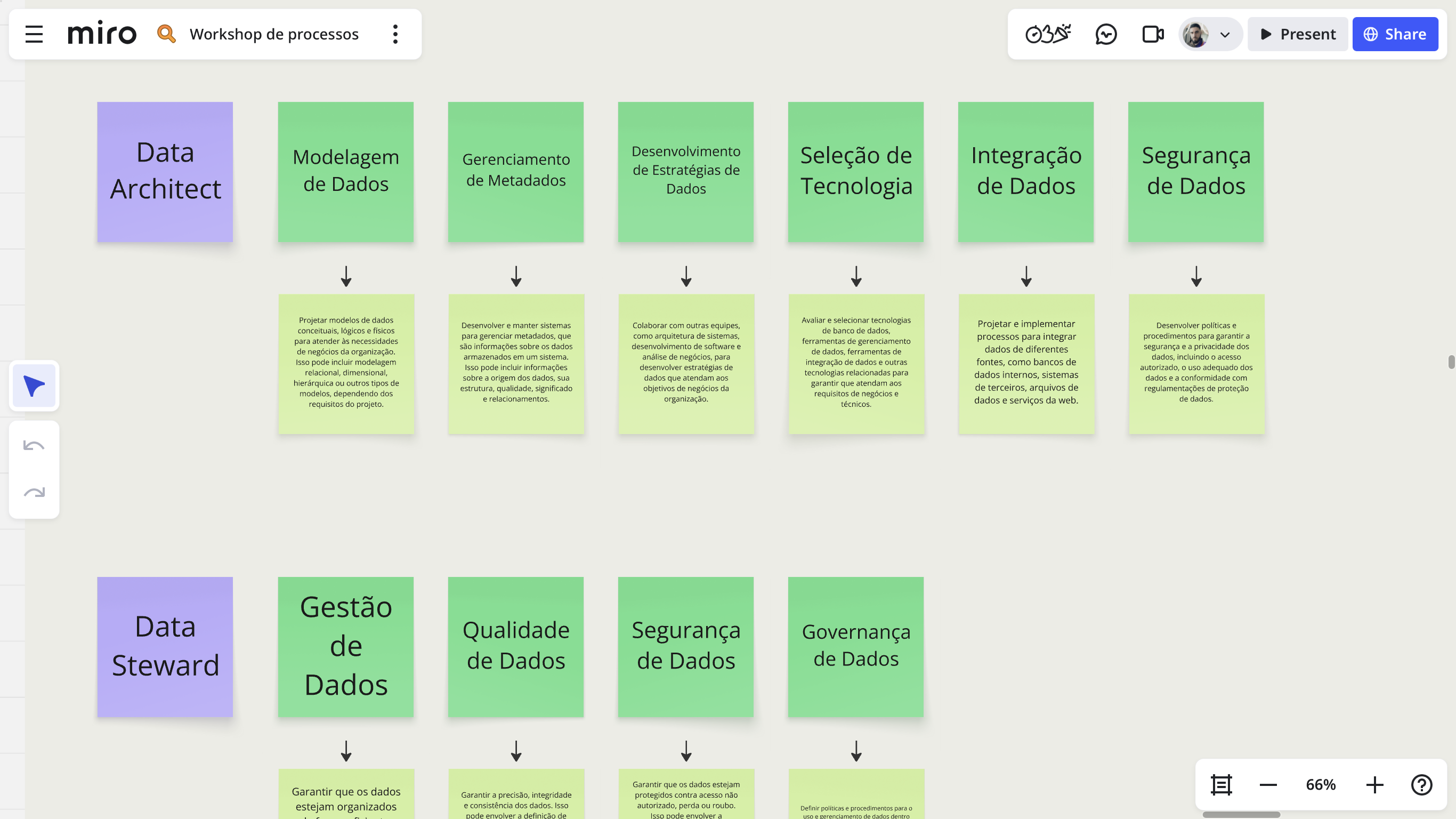
I facilitated the discussion and review of roles and responsibilities: Model Owner, PO/BA, Data Steward and Chapter Leads.
Synthesis of findings and next steps
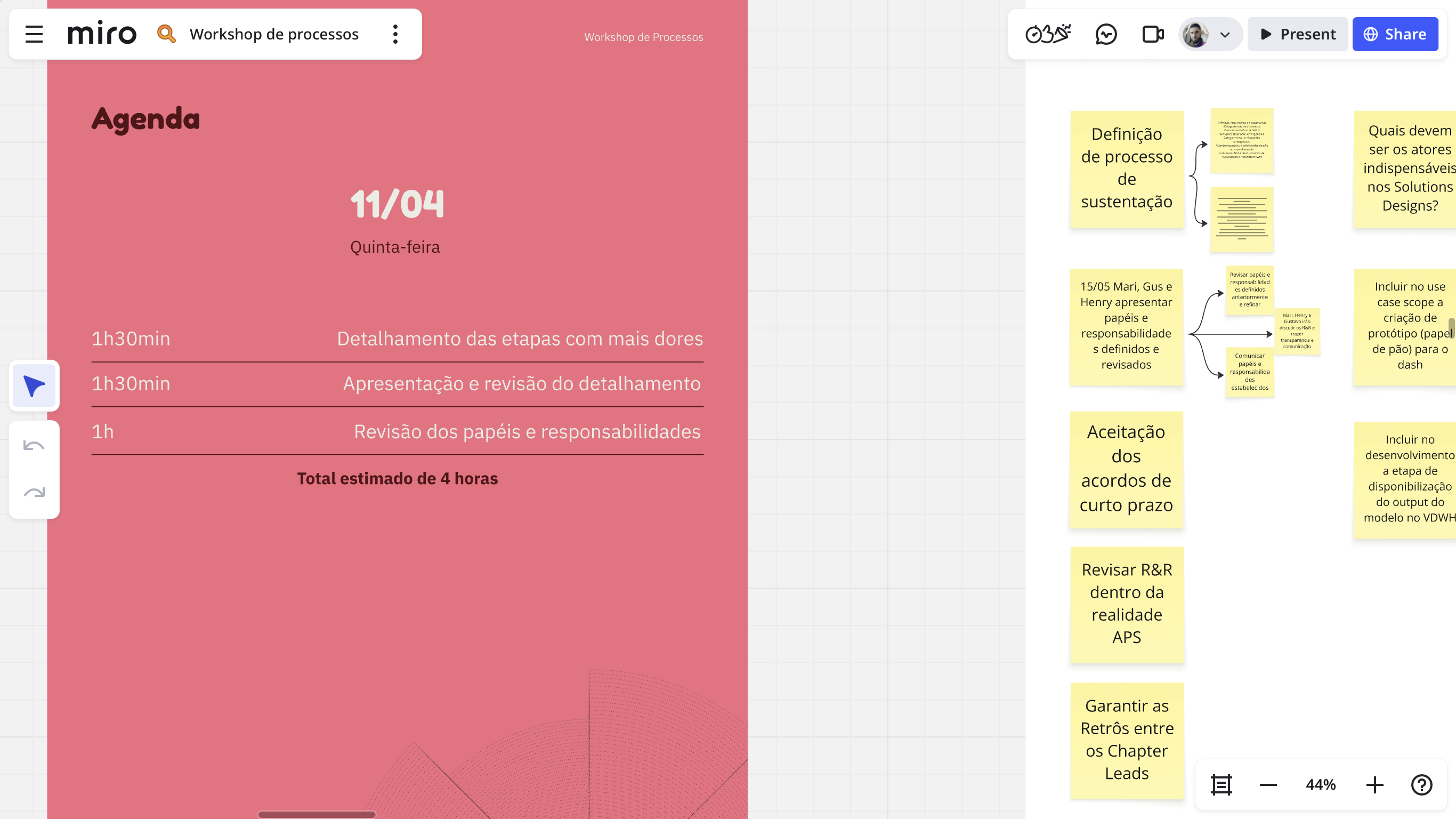
We closed with a detailed presentation and review of the findings, consolidating the key points and clearly defining the next steps.
Formalization, SLAs and ongoing ceremonies
The solutions were rolled out: formalized roles, a support flow with centralized tickets, defined SLAs and automatic alerts for Data Owners.
A visual walkthrough of the solution
Why each choice matters
Formalized roles and responsibilities
The responsibilities of Model Owner, PO/BA, Data Steward and Chapter Leads were reviewed, documented and formally communicated.
A structured support flow with SLAs
We created a support flow with centralized, categorized tickets, clear SLAs and automatic alerts for Data Owners.
Fixed ceremonies and ongoing monitoring
We set regular retrospectives, ceremonies with priority agendas and complete progress reports.